Why TikTok Business Accounts Suffer Muted Audio on Trending Sounds and How to Identify Commercial Music Early
Why TikTok Business Accounts Suffer Muted Audio on Trending Sounds and How to Identify Commercial Music Early
However, corporate accounts often confront an unpleasant limitation: muted or limited audio when employing trendy noises. TikTok has become one of the most powerful platforms for content dissemination, but it remains a challenge for business accounts. Business accounts are subject to more stringent licensing requirements, which restrict their ability to utilize music that is protected by intellectual property rights. Personal accounts, on the other hand, have unrestricted access to a broad variety of popular audio snippets. As a result of this mismatch, sometimes a sound may seem to be accessible while the material is being created, but it will become muted after it has been published. This may have a huge influence on performance and audience retention for businesses, marketers, and entrepreneurs that depend on TikTok for broadening their reach and increasing their level of interaction. It is not a technological malfunction; rather, it is a limitation that is driven by the platform and is legal in nature. This restriction is meant to comply with music licensing agreements. To prevent material from being muted, it is vital to have a solid understanding of how TikTok classifies audio and how it enforces these regulations. Through the acquisition of the ability to recognize commercial music at an early stage and the subsequent modification of content strategies, business accounts are able to maintain constant audio performance and prevent unexpected interruptions.
TikTok’s Differentiation Between Personal and Business Accounts and Their Use
Depending on the kind of account, TikTok divides users into several groups, each of which has its own set of capabilities and restrictions. Considering that business accounts are intended for usage in commercial settings, it is essential that they comply with more stringent copyright restrictions. A selected set of royalty-free or licensed songs is all that corporate accounts have access to, in contrast to personal accounts, which have access to the whole library of popular sounds. The enforcement of this difference is done to safeguard those who have music rights and to guarantee that brands do not exploit content that is protected by copyright without the appropriate license. As a consequence of this, a sound that is popular among personal users and is currently trending could not be legally accessible for commercial accounts. Specifically, this structural difference is the root cause of the problem with the muffled audio.
The Importance of Restrictions Placed on Commercial Music Libraries
TikTok offers a Commercial Music Library that is tailored to the needs of business customers. This library contains tunes that have been approved for usage in commercial settings. Despite the fact that this library has a wide range of alternatives, it does not necessarily correspond to the sounds that are currently popular on the platform. Copyrighted music that is not part of the commercial collection is often among the most popular types of audio. When a business account makes an effort to utilize such audio, the platform could initially let it throughout the editing process, but it might prohibit it after it is publishable. The result is videos that are muted or distribution that is restricted. The disparity between popular sounds and licensed music poses a difficulty for companies who are striving to maintain their relevance while adhering to the regulations dictated by the platform.
The Reasons Behind the Muted Sound After Posting
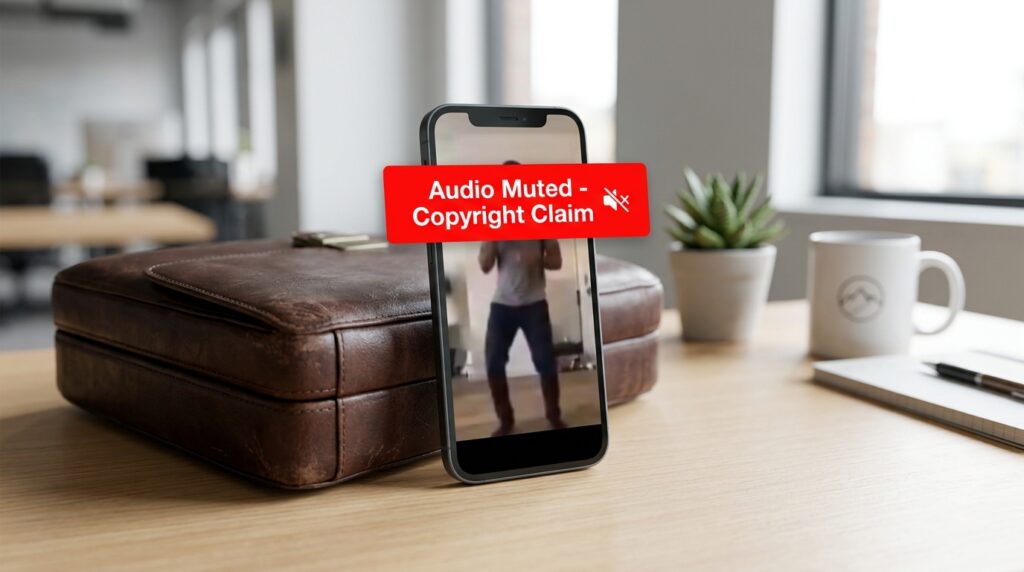
The fact that the audio may seem to be operational while the editing process is being carried out but then gets muted after it has been posted is one of the most perplexing features of this problem. TikTok does a last compliance check at the posting step, which is the reason why this issue arises. In the event that the system determines that the audio that has been chosen is not authorized for use in commercial settings, it will immediately erase or muffle the sound. The delayed application of this rule might catch content producers off guard, particularly if they depend on real-time previews to complete their work. Despite the fact that these limits may cause disruptions to the user experience, the platform places a higher priority on complying with the law than it does on the convenience of its users.
The Methods Used to Identify Popular Sounds as Restricted
It is common practice to identify popular sounds by analyzing their license status and the patterns of their use. The mechanism that TikTok uses establishes whether a track is a copyrighted piece of music or a tune that is part of the company’s commercial repertoire. When a sound comes from a source that is protected by intellectual property rights, it is often prohibited for use in commercial accounts. It is possible that these noises may continue to surface in the discovery aspects of the app, which may cause confusion for users who take the assumption that they are accessible elsewhere. Because the platform does not often give obvious signs of the license status of a sound, it is difficult to assess whether or not it is safe to utilize the sound. One of the factors that leads to the prevalent problem of muffled audio is the lack of transparency.
The Process of Recognizing Commercial Music Before Utilizing It
Before making use of a sound, it is essential to determine whether or not it is a part of the Commercial Music Library. This will help prevent the audio from being muted. Through accessing the specialized library inside the app, business accounts have the ability to filter any audio choices they make. This collection contains sounds that have been tagged and validated for usage in commercial settings, assuring that they will not be muted once they have been posted. In addition, researching the origin of the sound and the specifics of its use might reveal information on the license status of the sound. There is a high probability that a sound will be limited if it is connected with a popular song or singer. For the purpose of avoiding expensive errors and ensuring constant performance, it is beneficial to develop the practice of evaluating audio before adding it into material.
Implications for Metrics Regarding Reach and Engagement
This may have a major influence on the amount of people who watch a video and how engaged they are with it. When it comes to making an impression and getting the point across, sound is an extremely important factor. Removing the audio from the material may cause it to lose its attractiveness and fail to connect with the audience. Because of this, the amount of time spent watching may drop, the amount of engagement can decrease, and the algorithm’s visibility can diminish. Muted videos often fail to match the requirements of TikTok’s algorithm, which prioritizes material that maintains user engagement. Over the course of time, persistent problems with audio may have a severe impact on the entire performance of an account; thus, it is vital to solve the problem in a proactive manner.
The Most Frequent Errors That Corporate Accountants Make
Due to a lack of information regarding licensing laws, a significant number of business accounts utilize restricted audio without their real knowledge. The selection of popular sounds without first confirming that they are available for commercial usage is a typical source of error. Relying on editing previews without taking into consideration the final compliance check is another kind of this. Additionally, there are people who believe that if a sound is in widespread usage, it must be risk-free, which is not always the case. The repurposing of information from personal accounts might also result in complications, particularly if the audio in question is not authorized for usage in commercial settings. The producers may enhance their content strategy and prevent repeating errors if they are aware of these flaws and take steps to avoid them.
Alternative Methods to Overcome the Limitations of the Audio
In spite of these limitations, there are ways that are helpful for ensuring that the information on corporate accounts is of a high quality. Using songs from the Commercial Music Library not only assures compliance but also provides a variety of audio alternatives to choose from. In addition to enhancing authenticity, the creation of unique audio or voiceovers may help businesses avoid licensing concerns. There are certain businesses that work along with producers that engage in personal accounts in order to indirectly capitalize on trendy sounds. A further way to compensate for the absence of trending music is to place an emphasis on compelling graphics and narratives. It is possible for business accounts to continue producing compelling content without the danger of having their voice muted if they are able to adapt to the limitations of the platform and investigate different perspectives.