Diagnosing Sudden Reach Halts on Instagram Reels After Changing the Cover Image Post-Publishing
Diagnosing Sudden Reach Halts on Instagram Reels After Changing the Cover Image Post-Publishing
The performance of Instagram Reels is very sensitive to early engagement signals, metadata stability, and the uniformity of content display. One of the most common problems that creators have experienced is that when altering the cover picture of a reel after it has been published, the reach of the reel suddenly drops or stops entirely. This behavior is sometimes misunderstood as a punishment or algorithm suppression; nevertheless, the underlying reason is typically associated with the manner in which Instagram reprocesses metadata, re-evaluates content categorization, and recalibrates early distribution signals. Not only is the cover picture a visual component, but it also serves as an important information component that has an impact on click-through behavior, feed preview performance, and initial audience targeting. Changes made to it after it has been published have the potential to cause the system to partly reset rating signals or to initiate re-evaluation cycles. Having a solid understanding of how Instagram handles post-publication modifications is very necessary in order to effectively diagnose these swings in reach. Those who create content may improve their capacity to control Reel’s performance stability by doing an analysis of metadata recalibration, disruptions to engagement velocity, and distribution re-testing.
An Overview of the Initial Distribution Process for Instagram Reels
Following the publication of a Reel, Instagram instantly starts testing it with a certain subset of its audience in order to assess the potential for interaction. This early testing phase is dependent on a number of different indications, such as the following: watch duration, retention rate, interactions, and click-through behavior from the cover picture. It is also important for the cover picture to be shown in profile grids or suggestion feeds since it plays a significant part in influencing whether or not viewers choose to see the Reel overall. In the event that the system’s performance metrics satisfy the predetermined internal criteria, the system will progressively extend distribution after it has gathered sufficient data. This first phase is very sensitive to any changes that may occur in the display elements or media metadata of the material.
The Reasons Behind the Influence of Cover Images on Early Engagement Data
When a user encounters a Reel in a setting that is not associated with autoplay, the cover picture serves as the first source of visual input. There is a correlation between it and the conversion rates of impressions to views, particularly on profile grids and hashtag feeds. On the occasion that a cover picture is modified after it has been published, the system is required to alter the manner in which the content is visually represented across various surfaces. As a result of this change, there is a possibility that the previously acquired engagement data will no longer correspond with the changed visual presentation, which may temporarily disturb the consistency of click-through. As a consequence of this, Instagram could reevaluate how well the Reel would work in the preliminary distribution testing.
The process of reprocessing metadata and doing algorithmic reevaluation
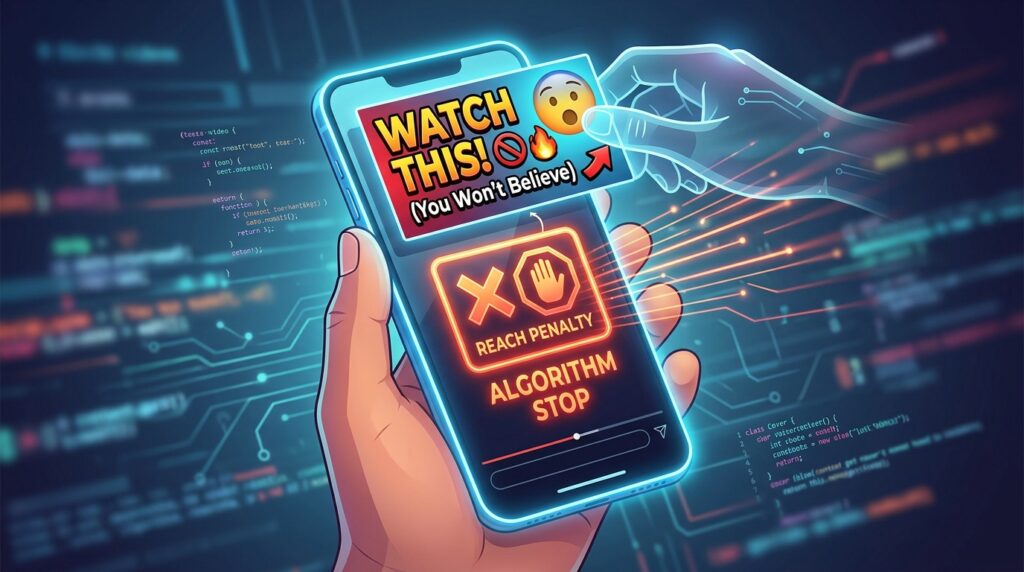
Changing the cover picture of an Instagram account causes the content indexing system to update the metadata associated with the image. This compels the platform to reprocess certain aspects of the Reel, such as the association of thumbnails, the presentation of previews, and the mapping of engagements. It is possible that the algorithm may briefly limit distribution during this reprocessing phase in order to re-calibrate performance expectations. It is possible for the system to assess the user interaction history in a manner that is inconsistent due to the updated metadata, despite the fact that the video content itself does not change. It is possible that this reevaluation may result in a perceived stalling of reach or precipitous decreases.
Influence on the Rate of Participation and the Rate of Distribution Momentum
The rate at which a Reel starts to accrue interactions after it has been published is referred to as its engagement velocity. When it comes to deciding whether or not the information gets distributed to bigger audiences, this is an essential component. Even a modest alteration to the cover picture has the potential to disrupt the continuity of interaction patterns that were established during the original testing period. Following the implementation of the modification, users who had previously interacted based on a single visual representation would react differently, which would result in a shift in the predicted engagement trajectory. There is a common misunderstanding that algorithmic suppression is the same thing as this interruption, which might slow down momentum.
Across all distribution surfaces, there is inconsistency in the thumbnails.
There are a number of different surfaces on which Instagram shows Reels, including the main feed, the Explore page, profile grids, and the results of hashtag searches. When a cover image is updated post-publication, synchronization across these surfaces may not happen instantly. This results in momentary inconsistencies, in which different viewers see various versions of the same Reel due to the interaction between them. These kinds of anomalies may have an impact on click-through rates and undermine the trust that algorithms have in the consistency of the information. In the absence of an update to all surfaces, distribution may continue to be unstable or decreased.
In the context of recommendation systems, re-testing behavior
After making a substantial modification to the metadata of a Reel, such as updating the cover picture, Instagram may, in some circumstances, re-test the Reel. For the purpose of evaluating performance under the altered presentation settings, this re-testing entails reintroducing the information to a more limited audience group. There is a possibility that the algorithm will decrease the larger distribution if the engagement metrics during this phase are weaker than the first test. The conduct in question is not a punishment but rather a mechanism for recalibration that is intended to keep the accuracy of recommendations intact. Nevertheless, it may result in a decrease in reach that is either temporary or permanent.
The Most Frequent Misconceptions Regarding Reach Drops
It is a common misconception among artists that altering a cover picture would result in a shadowban or manual suppression; however, patterns of behavior on platforms do not support this assumption. The theory that is more consistent with reality is algorithmic recalibration in conjunction with interruption of the engagement signal. In actuality, cover image changes reset a portion of the content’s visual interaction history, which is another common myth. Another misconception is that cover image changes increase performance without causing any adverse effects. A number of individuals are likewise of the opinion that the performance of Reels is unaffected by changes in metadata, which ignores the significance of presentation cues during the early stages of distribution.
When changes to the cover image are less detrimental
Not every modification to the cover picture will result in a decrease in reach. It is possible that minor revisions made quickly after publication will have less of an effect if the Reel has not yet seen widespread dissemination. Likewise, modifications that enhance clarity or consistency with the context of the information may not have a detrimental impact on participants’ involvement. There are a number of factors that determine the intensity of the effect, including time, beginning performance strength, and the extent to which the Reel has already advanced through the dispersion phases. Compared to modifications made after the Reel has established consistent engagement patterns, alterations made during the early stages of the production process are often less disruptive.
Exceptional Methods to Prevent Disruptions to the Reach
Creators should always finish cover pictures before posting them whenever it is practicable to do so. This will help reduce performance instability. In the event that modifications are required, they have to be implemented at an early stage in the lifespan of the Reel, prior to the occurrence of considerable distribution growth. You should avoid making frequent or recurrent modifications since doing so raises the volatility of the metadata and decreases the trust of the algorithm. Following the completion of revisions, monitoring engagement may assist in determining if performance is improving or deteriorating. Creators are able to maintain better and more predictable reach results on Instagram Reels by keeping consistency in visual presentation and eliminating post-publication adjustments when this is possible.