Social-First Data: Using In-App Polls and DMs as Your Primary Market Research Engine
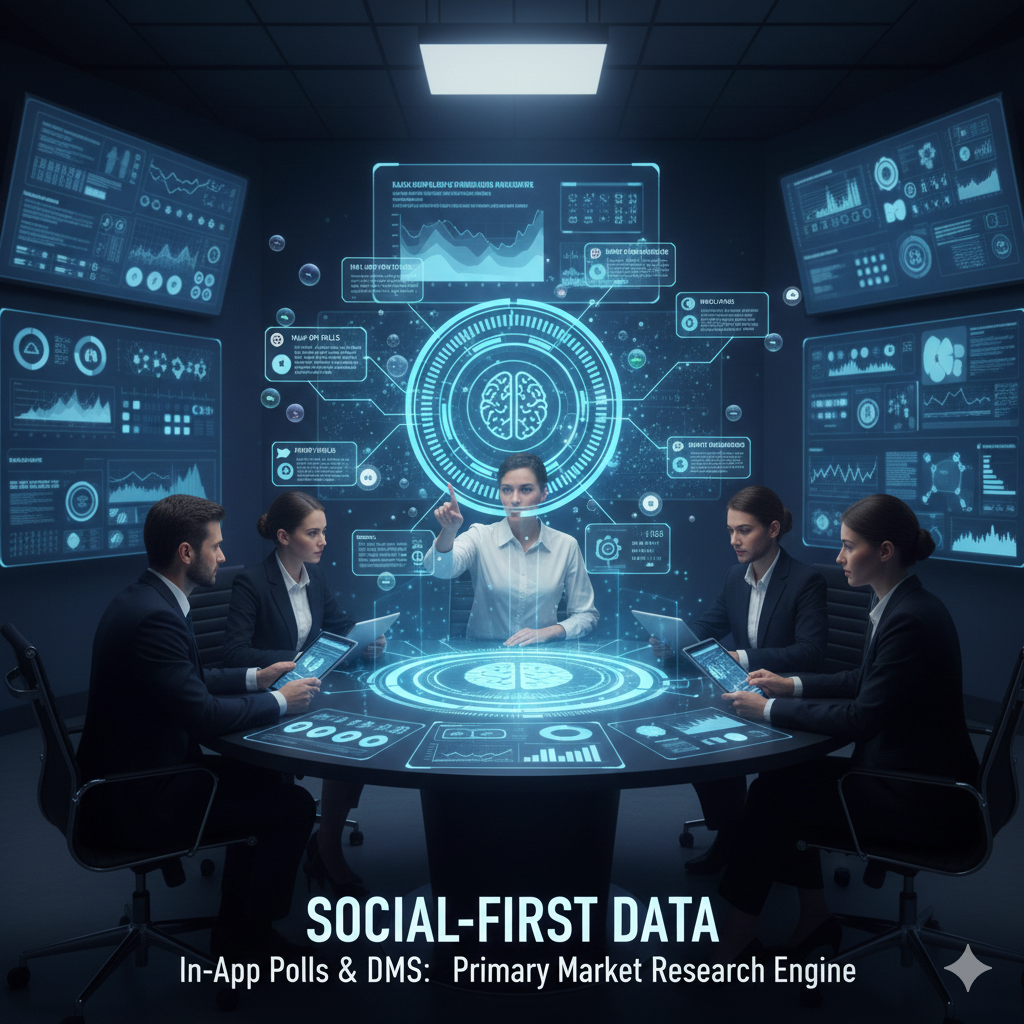
Social-First Data: Using In-App Polls and DMs as Your Primary Market Research Engine
It is no longer the case that market research is restricted to the use of pricey research instruments, questionnaires, and focus groups. As a result of their transformation into real-time data ecosystems, social platforms have become places where users continually share their opinions, preferences, and feedback. Rather than requesting that individuals fill out lengthy forms, businesses now have the ability to instantly capture insights via interactions inside the app itself. Information that is raw and unfiltered is obtained directly from the audience via the use of polls, responses, comments, and private messaging. This information is more trustworthy since it is derived from natural behavior rather than queries that were imposed on it. Users answer in a casual manner, without the pressure that is often associated with formal study settings. As a consequence of this, insights become more precise, more emotion-driven, and more representative of the actual requirements of the market. The approach of social-first data reflects a change away from organized research and toward continuous listening.
The constraints that are inherent in conventional market research
Methods of market research that have been used traditionally are often sluggish, costly, and detached from actual behavior. It is more common for surveys to depend on hypothetical responses than on real acts. Societal pressure and artificial environments are two factors that can have an impact on focus groups. Decision-making is slowed down since the acquisition of data might take weeks or even months. It is possible that the market circumstances have already shifted by the time such insights become public. In this way, a gap is created between the data and the reality. When conducting traditional research, sample size and diversity are both restricted. Because of this, the conclusions might not accurately reflect the feelings of the audience.
What Makes In-App Polls a More Trustworthy Source of Information
For users, in-app polls have a relaxed and uncomplicated feel to them. They will only require a small amount of effort and will only take a few seconds to respond to. Participation rates are significantly increased as a result of this. Users respond in a natural way because polls are integrated into content that they encounter on a daily basis. In no way does it feel like you are being investigated or examined. Because of this, bias is reduced, and authenticity is increased. Actual opinions are reflected in the poll results in real time. Without having to set up complicated systems, companies are able to rapidly test ideas, preferences, and reactions. There is an immediate and actionable response to the data.
The Effectiveness of Direct Messages as Routes for Receiving Feedback
You can obtain some of the most valuable qualitative data that is currently available through direct messages. Users privately discuss their personal experiences, thoughts, and problems with one another. The result is a more profound understanding than mere public comments. DMs frequently explain the emotional motivations that lie behind decisions. People explain the reasons why they like or dislike a particular thing. Simply relying on numerical data is not going to be enough to capture this context. Private conversations have the impression of being more open and detailed. When repeated messages are received over time, patterns begin to emerge. Unmet needs and opportunities that have been hidden are revealed by these patterns.
In contrast to delayed research, real-time data
Data that is based on social interactions is collected in real time, whereas traditional research is conducted in cycles. Because of this distinction, firms’ decision-making processes are altered. As a result of real-time insights, immediate adjustments can be made to both products and strategies. As new trends emerge, brands have the ability to react to them. Research that is delayed encourages firms to depend on assumptions that are no longer relevant. Social data is a reflection of present behavior, not of memories from the past. It becomes more predictive and relevant as a result of this. In marketplaces that are always changing, speed becomes a competitive advantage. A continuous learning loop is created via the use of real-time feedback.
Ways in Which Social Data Can Help Improve Product Development
When it comes to the construction and improvement of goods, social-first data has a direct impact. Prior to the beginning of production, polls show preferences about features. DMs report usability concerns following the debut of the product. The comments provide light on matters of uncertainty, expectations, and levels of pleasure. A feedback-driven product cycle is created as a result of this. Brands monitor genuine responses from customers rather than attempting to assume what they want. Decisions about products are now made on the basis of facts rather than assumptions. Risk is decreased, and adoption is increased as a result. When consumers are provided with social data, they become co-creators of the product.
Through the Practice of Social Listening, Emotional Intelligence
Traditional statistics does not take into account the emotional cues that are captured by social media. A user’s emotions may be inferred from their tone, vocabulary, emoticons, and responses. The market comprehension is enhanced by the addition of this emotional dimension. Instantaneously, brands are able to perceive feelings of dissatisfaction, enthusiasm, or perplexity. The refinement of message and positioning is facilitated by emotional intelligence. It enables organizations to understand the attitude of their customers. Gaining an understanding of emotions enhances the efficiency of communication. Logic and psychology are brought together via social-first data. This results in a greater connection with the brand.
The Transition from Using Sample Groups to Using Living Audiences
Research that is conducted using traditional methods uses small sample groups. In the context of live, changing audiences, social-first data is effective. A data point is created for each and every interaction. As a result, the audience is always engaged and constantly evolving. A dynamic research environment is produced as a result of this. Instead of being stagnant in reports, insights get more and more refined with time. Behaviour is something that brands notice, not simply answers. The study becomes more natural and less artificial as a result of this. The market transforms into a dynamic system rather than a dataset that remains unchanged.
The Reasons Why Social-First Data Is Less Scalable
When there is an increase in the audience, social data automatically scales. More insights are created in proportion to the amount of user engagement. It is not necessary to expand either the budget or the tools. When people connect with one another, data collecting occurs automatically. Research is now available to both big and small organizations as a result of this discovery. In addition, scalability implies a diverse range of inputs. Different demographics and points of view each provide their own unique insights. Thus, the quality of decisions is improved. Through the use of social-first data, market research is transformed from a cost center into an integral part of the company.
How Market Research Strategy Will Develop in the Future
Rather than relying on questionnaires, the future of market research will place more emphasis on discussion. Rather of asking questions, brands will concentrate on listening. Instead of interruption, data will be generated via engagement. Long questionnaires and cold outreach will be replaced with in-app polls and direct messages. Not only will research become periodic, but it will also become continuous. Emotional, contextual, and real-time insights are guaranteed to be provided. Because of this, a more humane view of markets is accomplished. The concept of social-first data is not only a technique; rather, it is a new philosophy that describes how organizations learn from people.